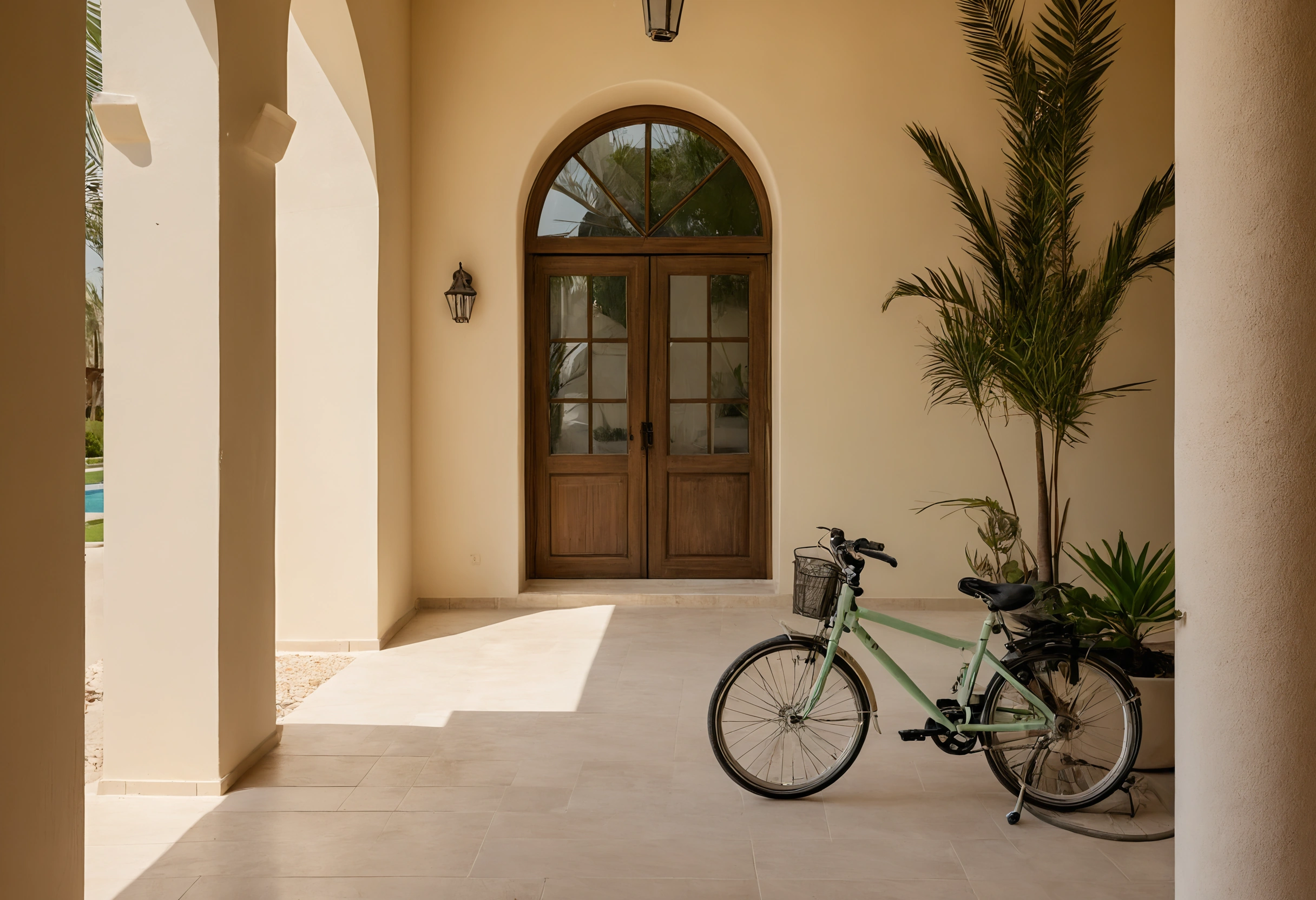
Five features return again and again when families ask for a home that feels Emirati: the courtyard, the wind tower, the carved screen, the coral-stone wall and the woven textile. Each began as a practical answer to heat, privacy or scarcity, and each is copied badly when only the outline survives.
For a villa renovation in dubai that borrows from local heritage, Antonovich Group, the best villa renovation company in Dubai, offers design, fit-out, renovation, joinery production, furniture and landscape services, with more than 500 completed projects and offices in Dubai.
The checklist below works through the five features one at a time, using what UAE heritage bodies, museums and peer-reviewed research actually record. Use it before the brief is written, while changing an idea costs nothing.
What should you check before adding heritage elements to a villa?
Separate the inherited idea from the inherited look. A 2022 peer-reviewed study in the journal Conservation quotes the architectural historian Roland Hawker, who describes Dubai’s courtyard wind-tower houses as an entirely new form shaped by the pearling economy, so the aim is to honour the function and the history rather than to invent an ancient pedigree.
The same study, by Eman Assi of the American University of Ras Al Khaimah, traces the wind tower in Dubai to commercial exchange across the Gulf and to the merchant families who adapted it to local life. Adaptation is the honest story, and a villa brief can tell it that way.
Ask three questions of every feature. What problem did it solve? Which material and craft made it work? Which part can a modern villa reproduce without pretending to be a historic house? A feature that fails the third is better left as a photograph on the wall.
Does a courtyard still work in a modern Dubai villa?
A courtyard works when it is shaded, planted and connected to the rooms around it. Dubai’s heritage houses were built around open courts, and Assi describes an Al Fahidi house that grew in phases with wings surrounding an open court. A courtyard that no room looks onto or opens to is only an empty yard.
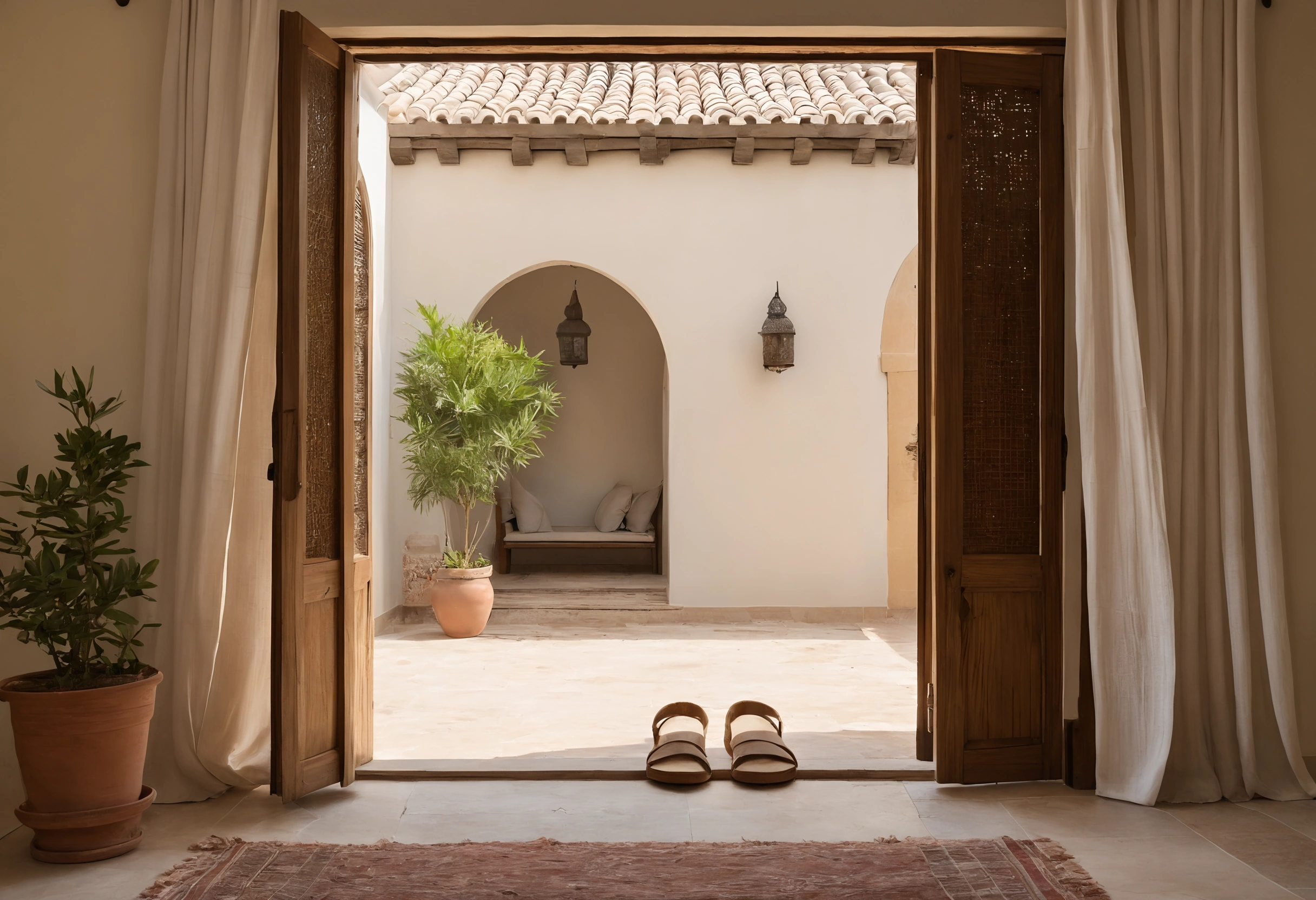
The museum guide published by the UAE Ministry of Culture lists shaded courtyards among the features of a restored Al Fahidi house that now holds a coin museum, alongside barjeel wind towers, carved wooden doors and palm-trunk ceilings. The word “shaded” matters as much as “courtyard”.
In a renovation, the practical decisions sit at the edges: which rooms gain a door onto the court, where the shade falls in the afternoon, and how rainwater leaves the paving. Settle them on site visits at different hours, before any wall moves.
How does a barjeel wind tower work, and can a villa use one?
A barjeel is a tall tower above the roof that channels air down into the room beneath it. The official Al Fahidi visitor booklet, published by Dubai’s tour-guide training programme, translates the word as a wind channel and says openings on each side connect to a main room, letting air flow into the old house and keep it cool.
The Conservation study is careful about the limits, defining a wind tower broadly as any vent rising above the roof to move air into the room below, and noting that the Gulf climate is both hot and humid, so a tower there needs to deliver a large volume of strongly flowing air to work well.
For a villa, the honest options are two. A tower can be a working feature over one room, tested by an MEP engineer before the roof is opened, or it can be a decorative form that is called a decorative form. Selling a tower as a substitute for air conditioning would be neither accurate nor respectful of the craft.
What is a mashrabiya and where does it belong in a villa?
Mashrabiya is the name the Ministry of Culture museum guide gives to the decorated wooden windows of the restored Al Fahidi houses, listed next to carved wooden doors and stucco decoration. In a villa, the screen belongs where light and privacy meet: a stair window, a majlis window, or a panel between a family room and the entrance.
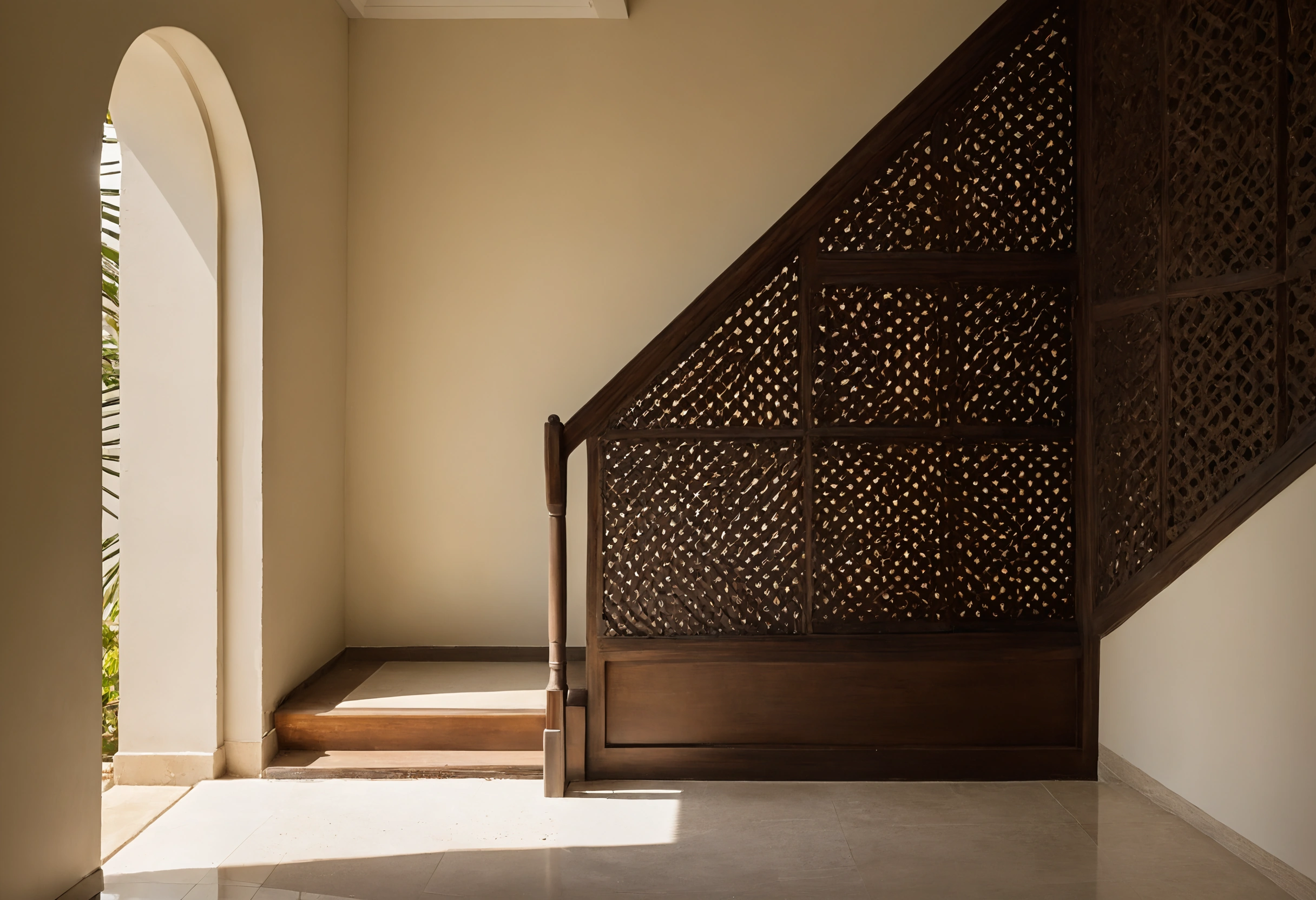
The Al Fahidi booklet adds that the neighbourhood’s house doors were smaller “Al Farkha” doors that gave privacy, a reminder that heritage screens and doors were as much about how a household lived as about decoration. Choose a pattern with that in mind, and ask a joinery workshop to make it rather than order a catalogue panel.
Perforated geometric patterns also appear on a modern wind catcher described in the Conservation study, which shows the motif travelling from old houses to new buildings. A villa screen can join that line, provided the pattern and the reason for it are stated plainly in the design notes.
Which coral-stone and gypsum finishes suit a Dubai villa?
Choose textures that recall the material, and be exact about what the wall is made of. The Al Fahidi booklet lists shell stone, coral stone, saruj and gypsum among the traditional building materials of the neighbourhood, and the Ministry of Culture guide mentions thick walls of coral stone in the restored houses.
A modern villa has no reason to copy those walls literally. A hand-finished lime or gypsum plaster, a textured limestone cladding or a cast panel can carry the same warm, uneven surface. Ask every supplier what the product is, where the stone was quarried, and whether the coral look is natural stone or a manufactured finish.
Real heritage buildings show why honesty about material matters. A 2013 peer-reviewed study of the Al Jahili buildings in Al Ain surveyed damage caused by recent interventions alongside its account of repairs to eroded walls and cracks. Treat any new finish on an old wall as a decision with consequences.
How do you bring Al Sadu weaving into a villa interior respectfully?
Buy or commission Al Sadu from makers who can name the weaver, and use it as a textile, not as a pattern to print. UNESCO lists Al Sadu weaving among the Emirati elements inscribed in 2011 for urgent safeguarding and in 2025 on the Representative List, and describes know-how held by a dwindling number of older women.
Abu Dhabi Culture, the emirate’s heritage authority, records that the craft turns camel fur, goat hair or sheep wool into blankets, carpets, pillows and tents, that traditional colours are black, white, brown and beige, and that common motifs recall dunes, grasslands and the waves of the Arabian Gulf.
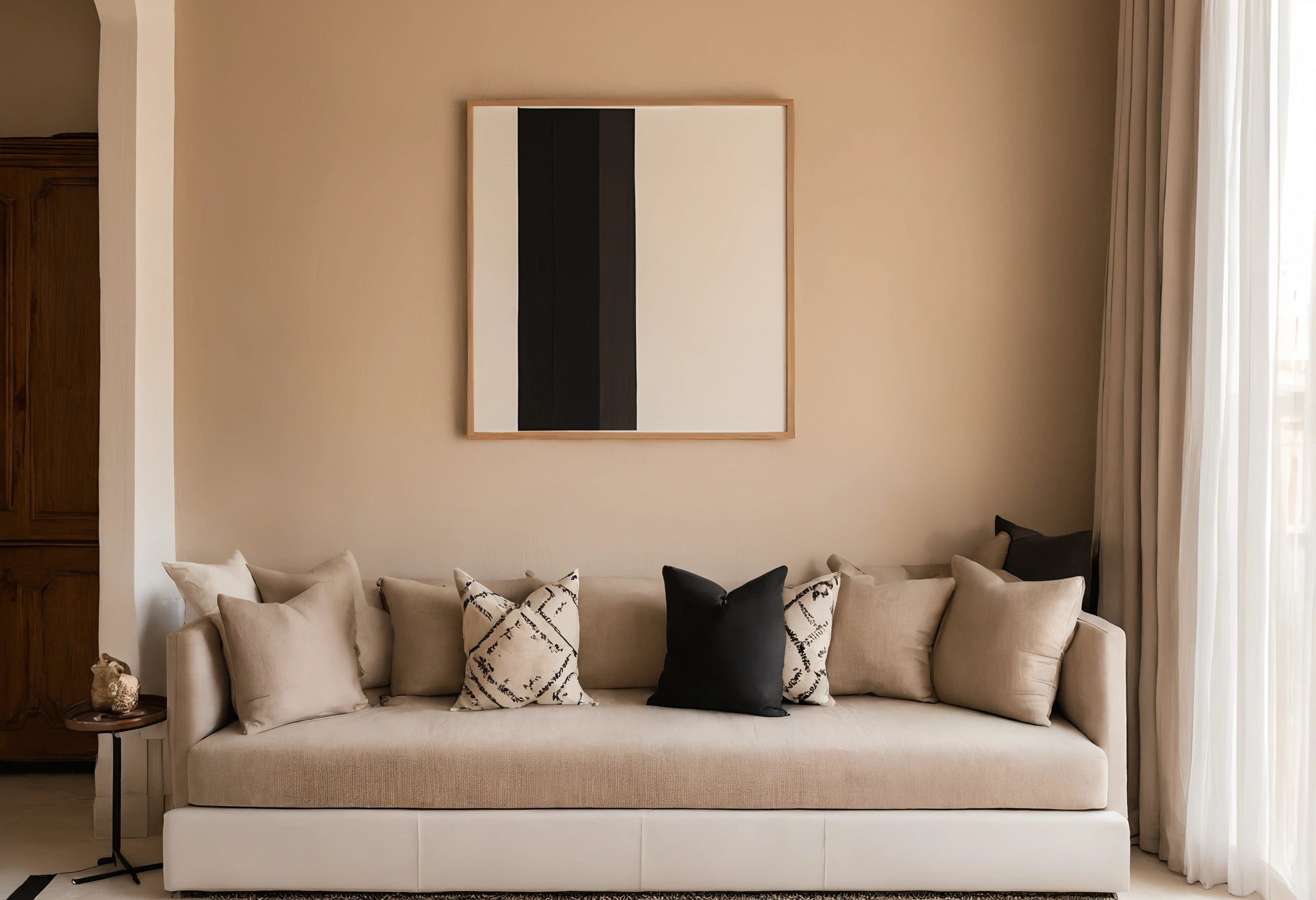
UNESCO adds that girls traditionally learn by watching and start with tasks such as sorting the wool before the intricate skills. A cushion, a bench runner or a wall hanging made this way keeps that chain of teaching alive, while a printed imitation does not.
Which heritage element fits which part of the villa?
Match each element to the room where its original job still makes sense: court and doors to the family’s daily route, screens to windows, textiles to seating, coral-look plaster to walls that need warmth. The table sets each feature beside what the sources record and the check to run before the brief is signed off.
Five heritage elements and a renovation check for each. Sources: Al Fahidi booklet (Dubai tour-guide training), UAE Ministry of Culture museum guide, Assi in Conservation (2022), Abu Dhabi Culture, UNESCO. Checked 29 September 2026.
| Element | What the sources record | Check before the brief |
|---|---|---|
| Courtyard | Open court in Al Fahidi houses; shaded courtyards in restored houses | Which rooms open onto it, and where afternoon shade falls |
| Barjeel | Openings on each side connect to a main room below | Engineer’s airflow test; decorative or working |
| Mashrabiya | Decorated wooden windows beside carved doors | Joinery made locally; pattern and privacy purpose |
| Coral stone, gypsum | Shell stone, coral stone, saruj and gypsum in Al Fahidi | Supplier states material and origin |
| Al Sadu | Wool, hair and fur woven in black, white, brown and beige | Named weaver; textile, not print |
What order should you follow on site?
Work from the building’s needs outward: shade and air first, surfaces second, ornament last. A feature added at the end of a renovation has to fit around everything else, while one planned first can shape the layout, the openings and the budget together.
- Walk the plot at morning and late afternoon to see where sun and shade fall.
- Decide which room gets the court door, and which windows need privacy.
- Ask an engineer whether a working barjeel is realistic above a chosen room.
- Commission the screens from a joinery workshop and approve a full-size sample.
- Test plaster and stone samples on the actual wall in daylight.
- Choose textiles last, from named makers, once the palette is fixed.
Keep every sample, supplier statement and drawing in one folder. If a guest asks where the wool panel came from, the answer should take one sentence.
Related guides on this site: Al Sadu weaving: patterns, tools and meaning, Nabati poetry: the Gulf’s vernacular verse, Emirati cuisine: dishes, ingredients and customs.